
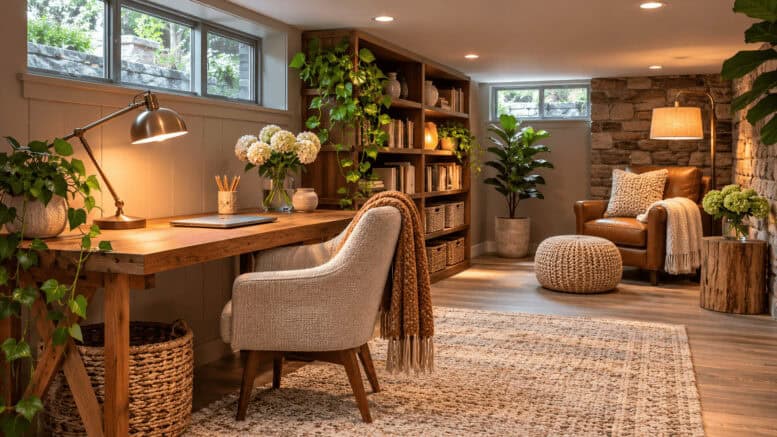
Basements get a bad reputation. Many of us see them as storage zones for holiday boxes, old bikes and that treadmill nobody uses. I see them differently because a basement offers quiet, privacy and plenty of floor space. Those are the things a good workspace needs, and they are already there waiting for you.
I want to share how to create a cozy home office down in the basement without making it feel like a cave. I have worked on a few home projects over the years, and the basement always teaches the same lessons. Light, warmth and dryness matter most. Style comes after that. We share a lot of home improvement and craft ideas here at Luis Magie, so I am coming at this from a practical angle. Nothing below needs fancy skills, and a free weekend, a modest budget and a clear plan can take you a long way.
Why a Basement Is a Smart Spot for Focused Work
A basement sits away from the busiest parts of the house. Footsteps, the television and kitchen chatter fade once you are a floor below. I have found that this natural separation helps me start and end the workday on purpose, which is hard to do at a kitchen table. The space is also usually large and open, so you can fit a full desk, a bookshelf and even a small reading corner without moving a single wall.
Basements can feel dark and cool at first, and that is where planning pays off. If you like a structured approach, you can get the insights from the basement office makeover page, which describes a makeover plan for this kind of room and can be a helpful starting point. Reading a plan like that before you shop can save you from buying pieces that do not suit the room.
I still encourage you to walk the space with a notepad before you buy anything. Write down where the outlets sit, where the windows are and where the furnace or water heater lives. Those details shape every choice that follows, from where the desk goes to how many lamps you need.
Check Moisture, Warmth and Safety Before You Decorate
Nothing ruins a cozy room faster than a musty smell. Before I bring in any furniture, I look for damp patches, white mineral stains on the walls and peeling paint near the floor. Those are signs that water is getting in. If you spot trouble, fix it first, because cosmetic upgrades will not hold up over a leak. A dehumidifier is a simple help, and I aim to keep indoor humidity between 30 and 50 percent.
Keep the Air Comfortable
Basements run cooler than upstairs rooms, so heating deserves some thought. A small electric heater or an extension of your existing ductwork can work, depending on your home. I prefer a heater with a thermostat and a tip-over shutoff. Airflow matters too, and a small fan or an air purifier keeps the room fresh through long work sessions.
Cover the Safety Basics
Test your smoke alarm and add a carbon monoxide detector if a furnace or gas appliance sits nearby. Check your local building rules before you frame walls or add wiring, and hire a licensed electrician for any new circuits. A little caution keeps a cozy project worry free and lets you enjoy the finished room with a clear mind.
Layer Warm Lighting to Brighten a Low-Ceiling Room
Lighting decides whether a basement feels welcoming. Many basements have small windows and one harsh ceiling fixture. That single bright bulb is what makes the room feel like a bunker, so adding more sources of light is the quickest fix I know.
Mix Three Types of Light
I build lighting in layers. Start with ambient light from flush-mount fixtures or recessed lights, add task light with an adjustable desk lamp and finish with accent light from a floor lamp or small string lights near a shelf. Choose warm white bulbs rated around 2700K to 3000K for a soft glow, because cooler bulbs can feel clinical after a few hours. Dimmers let you shift from morning focus to evening calm.
Make the Most of Natural Light
If you have a window, keep it clear. Hang light, sheer curtains and place your desk so daylight falls from the side. Glare on a screen is a common problem, so avoid facing the window head on. A mirror across from the window bounces light deeper into the room, and pale wall colors such as warm cream or soft gray reflect more of it too.
Choose Flooring That Warms Up Cold Concrete
Bare concrete feels cold under your feet and echoes sound. A good floor makes the room feel finished and keeps your toes comfortable during long calls. Several options suit a basement because they handle moisture better than solid hardwood, and each one fits a slightly different budget and skill level.
- Luxury vinyl plank looks like wood and resists dampness.
- Carpet tiles are easy to replace if one gets stained.
- Raised subfloor panels add a barrier between the concrete and your flooring.
- Area rugs over a pad add softness without a full renovation.
I lean toward a hard floor with a large rug under the desk. That mix gives you warmth and easy cleaning, and a thick rug pad adds cushioning and cuts down on noise. If you stand while you work, an anti-fatigue mat is worth considering because it eases pressure on your feet and back. Keep rug edges flat so your chair rolls smoothly and nobody trips. Budget matters here too. Carpet tiles can cover a small work corner for far less than a full floor, and you can add more as funds allow.
Plan a Layout and Furniture That Support Your Day
A cozy office still has to work well. I start by choosing where the desk goes. I like it facing into the room so I am not staring at a bare wall, and if space allows I keep my back to a wall for a sense of shelter. I take posture seriously too. Your screen should sit at eye level, your feet should rest flat on the floor and your elbows should bend at about ninety degrees.
Essentials Worth Having
- A supportive chair with adjustable height
- A desk with room for a laptop, notebook and mug
- Closed storage to hide cables and clutter
- A small shelf for reference books
- Power strips with surge protection
If the room is big, I divide it into zones. One side holds the desk and the other holds a comfy chair for reading or brainstorming, and a rug under each zone helps the eye see the difference. Keep walkways clear and leave space around the furnace for service access. A tidy layout feels calmer, and calm is what we want from a cozy room.
Add Personal Touches That Make the Room Feel Like Yours
This is the fun part. Once the basics are solid, you can make the space feel lived in. I always say a workspace should reflect the person using it, and crafts and hobbies are a good way to do that.
Bring in Texture and Color
Soft throws, cushions and curtains in warm earth tones make a basement feel inviting. Handmade items work well here. A knitted blanket draped over a reading chair or a painted frame on the wall adds personality that store-bought decor cannot match. Fabric also helps with sound, because curtains, rugs and padded furniture absorb echo and make your video calls clearer.
Add Greenery and Small Details
Low-light plants such as pothos, snake plants and ZZ plants cope well in basements. A few green leaves on a shelf soften hard edges and freshen the room. Wall art can come from things you already own, like a framed map, a child’s drawing or a photo from a trip. I hang pieces at eye level near the desk so I see them during the day. Finish with small touches like a candle you enjoy or a shelf for books and craft supplies. Keep it simple so the room stays focused on work.
Start Small and Enjoy Your New Basement Workspace
A basement office can be imperfect on day one, and I suggest you tackle it in stages. Start with the moisture and safety checks, then move on to lighting and flooring. Furniture and decor can follow as your budget allows. Working in this order means each step builds on a sound base, and you avoid redoing work later.
The biggest lesson I have learned is that small changes add up. A warm lamp, a good rug and a comfortable chair can turn a forgotten corner into a place you look forward to using, and none of it takes a fortune. Each piece you add also teaches you something about how you like to work, so the room keeps improving over time.
So grab a notepad, walk through your basement and write down what you see. Pick one project for this weekend, such as swapping a harsh bulb for a warm one or measuring for a rug. Once you take that first step, the rest tends to fall into place. Your quiet, comfortable workspace is closer than you think, so start today and enjoy the process.